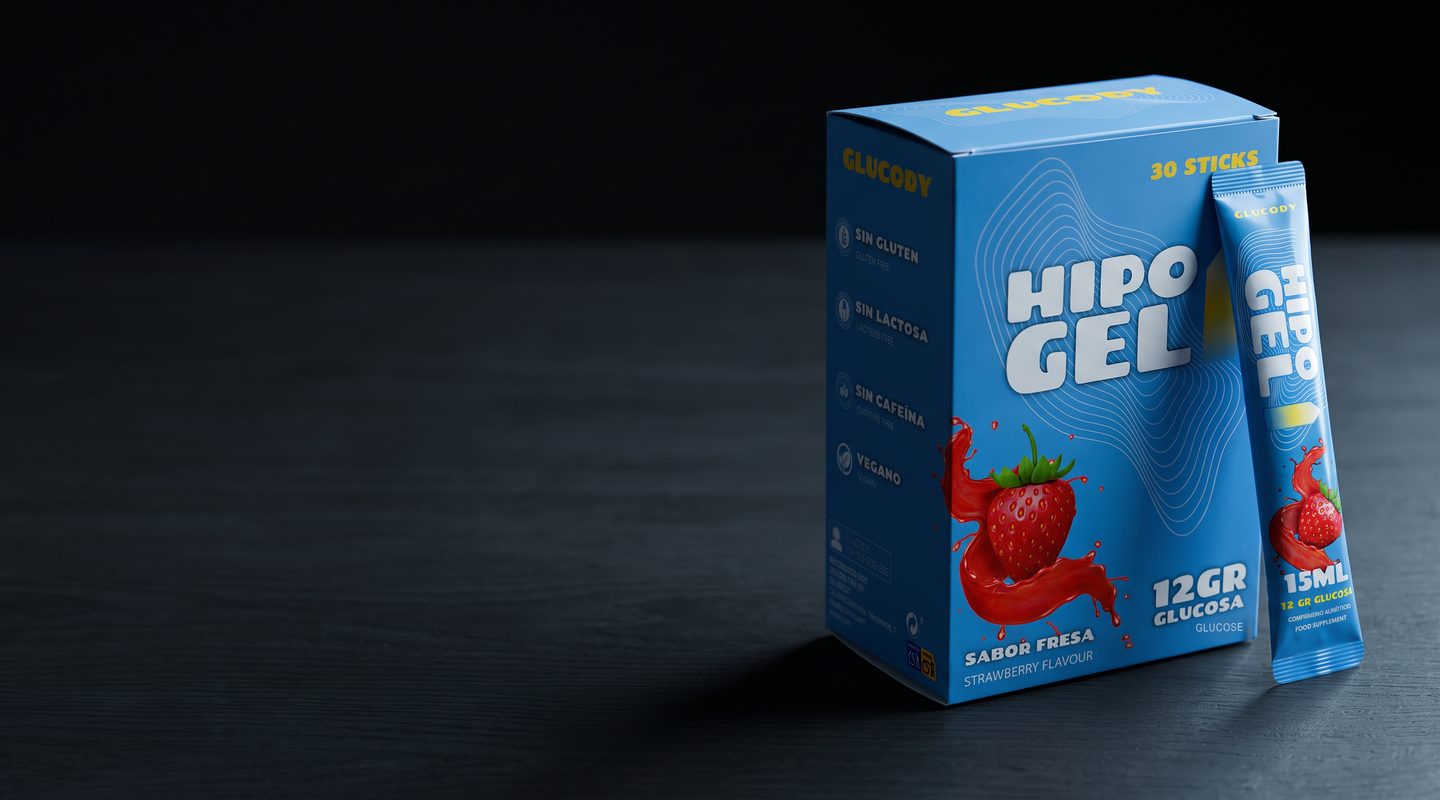
When we talk about foods that raise sugar, it is important to distinguish from the start two very different situations: those who need to raise glucose urgently because they have had a sugar drop (hypoglycemia), and those who want to control or avoid glucose spikes for having diabetes, prediabetes, or simply to follow a healthier diet.
Both perspectives are equally valid and require different answers. In this guide, you will find both: what to eat to raise sugar quickly when you need it, and which foods raise glucose more slowly and steadily for daily life. We also explain what the glycemic index is and why it is the key to understanding how each food affects your blood sugar.
What is the glycemic index and why does it matter?
The glycemic index (GI) is a scale from 0 to 100 that measures how quickly a food raises blood glucose after consumption. Pure glucose has a GI of 100 and is the reference point.
It is divided into three ranges:
-
High GI (70-100): sugar rises quickly and strongly. Ideal for treating hypoglycemia, but not for daily control.
-
Medium GI (56-69): moderate rise. Suitable for occasional consumption.
-
Low GI (0-55): sugar rises slowly and steadily. These are the most recommended for daily use in people with diabetes.
There are factors that modify the GI of a food: the ripeness of the fruit (riper = higher GI), the degree of processing (more processed = higher GI), the cooking (more cooked = higher GI) and if it is combines with fats or proteins (which reduce it). A pulp-free juice, for example, has a much higher GI than the whole fruit.
Foods that raise sugar the most (high GI): for hypoglycemia or emergencies
These are the foods that raise glucose more quickly and sharply. They are indicated to treat an active sugar drop or to prevent imminent hypoglycemia before intense exercise. If you want to know how to act during a drop, also check our guide on how to raise blood sugar quickly.
Pure glucose: glucose gel and tablets
Pure glucose has the highest possible GI (100) and is absorbed directly in the mucosa without the need for digestion, making it the fastest option for hypoglycemia. The fast-acting glucose gel is applied in the mouth and works within minutes, ideal if there is difficulty swallowing, while the glucose tablets or pills offer a fixed and controlled dose of 4 g per tablet.
Since they contain no fats or proteins, both products guarantee faster and more predictable absorption than any conventional food.

Sugary drinks
Liquids are absorbed faster than solids. These are the best high-GI liquid options:
-
Fruit juice without pulp (GI ~50-70): orange, apple, or grape juice provides about 15-20 g of sugar per 150-200 ml. Without pulp, it acts faster than whole fruit.
-
Standard sugary soda (GI ~65): half a can of regular soda (not zero, not light) provides about 20 g of sugar. Easy to find anywhere.
-
Water with sugar or honey: a tablespoon of sugar or honey dissolved in warm water. Honey under the tongue acts especially quickly in emergency situations.
Refined carbohydrates and simple sugars
These are the solid foods with the greatest glycemic impact:
-
Table sugar (GI ~65-70): sucrose. Two sugar cubes or a tablespoon provide about 10-15 g of fast-absorbing carbohydrates.
-
Honey (GI ~55-60): a mix of glucose and fructose. Glucose is absorbed quickly; fructose, more slowly. Also provides small amounts of minerals.
-
White bread (GI ~70-75): the starch in white bread is digested quickly. Sliced white bread has a higher GI than traditional bread loaf.
-
White rice (GI ~70-80): especially short-grain and very cooked. Sushi rice, for example, has a particularly high GI due to its preparation.
-
Boiled or baked potato (GI ~80-90): one of the foods with the highest GI. Cold or cooled potato has a lower GI than freshly cooked.
-
Processed breakfast cereals (GI ~70-80): corn flakes, puffed rice, or similar. They can raise sugar very quickly.
-
Candies and gummies without chocolate (GI ~65-80): practical to carry around. Useful in mild hypoglycemia but difficult to dose precisely.
Fruits with high or medium-high GI
Most fruits have medium GI, but some stand out for raising sugar more quickly:
-
Ripe banana (GI ~60-70): the riper, the higher the GI. Provides between 20-30 g of carbohydrates per piece.
-
Grapes (GI ~59-65): contain glucose and fructose in similar proportions. A small bunch can provide 15-20 g of sugar.
-
Watermelon (GI ~72): has one of the highest GIs among fruits, although its actual glycemic load is moderate because it contains a lot of water.
-
Pineapple (GI ~59-66): rich in natural sugars. Canned or syrup pineapple has a higher GI than fresh.
-
Mango (GI ~55-60): especially ripe. Rich in fructose and glucose.

Foods with medium GI: gradual glucose rise
They are useful for maintaining stable glucose levels throughout the day or to prevent a drop before prolonged activity without reaching emergency:
-
Instant oats (GI ~65-70): higher than traditional oats due to greater processing. Useful as a preventive snack.
-
Brown rice (GI ~55-65): bran fiber slows absorption compared to white rice.
-
Whole wheat bread (GI ~50-65): better option than white bread for daily use, although it is still a relatively fast-absorbing carbohydrate.
-
Green or unripe banana (GI ~40-50): the resistant starch it contains is digested more slowly.
-
Whole milk (GI ~30-40): lactose raises sugar moderately. A glass provides about 12 g of carbohydrates.
-
Plain unsweetened yogurt (GI ~35-40): combines proteins and carbohydrates. Good option for preventive snacks.
Foods that do not raise sugar (or do so minimally)
For people with diabetes or those who want to control their glucose daily, these are the safest foods because they have a low or practically zero GI:
Healthy proteins and fats
Proteins and fats they do not directly raise glucose because they contain no carbohydrates. Also, when combined with carbohydrates, they reduce the overall meal GI:
-
Meats and fish: chicken, turkey, beef, salmon, tuna, sardines. GI practically 0.
-
Eggs: contain no carbohydrates. GI 0.
-
Olive oil, avocado, nuts: healthy fats that help moderate the glucose rise from other foods when eaten together.
-
Cheese and full-fat dairy: Low GI. Their fat content slows the absorption of present carbohydrates.
Vegetables and greens
Most vegetables have a very low GI thanks to their high fiber and water content:
-
Green leafy vegetables (GI ~15): spinach, lettuce, chard, kale. Practically no impact on glucose.
-
Broccoli, cauliflower, zucchini (GI ~15-20): excellent options for glycemic control.
-
Tomato, cucumber, pepper (GI ~15-30): rich in water and fiber.
-
Raw carrot (GI ~35): although it has more sugar than other vegetables, its GI is moderate. Cooked carrot has a higher GI.
-
Legumes (GI ~25-40): despite being rich in carbohydrates, their high fiber and protein content gives them a relatively low GI.
Fruits with low GI
-
Apple and pear (GI ~35-40): rich in pectin, a soluble fiber that slows sugar absorption.
-
Strawberries and red berries (GI ~25-40): low in sugar and rich in antioxidants.
-
Whole orange (GI ~40-45): the pulp fiber slows absorption compared to juice.
-
Cherries (GI ~22): one of the fruits with the lowest GI.
-
Kiwi (GI ~50-53): on the border between low and medium, but a good source of vitamin C.
Glucose food table: glycemic index at a glance
Here is a summary table with the most common foods ordered by their glycemic index:
|
Food |
Approximate GI |
Speed of rise |
|---|---|---|
|
Pure glucose / glucose gel |
100 |
⚡⚡⚡ Instant |
|
Baked potato |
85-90 |
⚡⚡⚡ Very high |
|
Very cooked white rice |
80-85 |
⚡⚡⚡ Very high |
|
White bread / baguette |
70-75 |
⚡⚡ High |
|
Watermelon |
72 |
⚡⚡ High |
|
Sugary soda |
65-70 |
⚡⚡ High |
|
Ripe banana |
60-70 |
⚡⚡ Medium-high |
|
Pulp-free orange juice |
50-65 |
⚡⚡ Medium-high |
|
Brown rice |
55-65 |
⚡ Medium |
|
Whole wheat bread |
50-65 |
⚡ Medium |
|
Oats / oat flakes |
40-55 |
⚡ Medium-low |
|
Whole orange |
40-45 |
⚡ Low |
|
Apple / pear |
35-40 |
⬇ Low |
|
Plain unsweetened yogurt |
35-40 |
⬇ Low |
|
Lentils / chickpeas |
25-40 |
⬇ Very low |
|
Berries |
25-40 |
⬇ Very low |
|
Leafy green vegetables |
10-20 |
⬇ Minimal |
|
Meats, fish, eggs |
0 |
— No impact |
Which glucose foods to choose depending on the moment
There is no single answer to which foods raise blood sugar: it depends on what you need them for.
If you have active hypoglycemia (blood sugar below 70 mg/dL)
You need high GI and immediate absorption. Priority: glucose gel, glucose tablets, pulp-free juice, or sugary soda. Avoid fats (chocolate, pastries) because they slow absorption when you need it most. Check our complete guide on how to raise blood sugar quickly for the step-by-step protocol.
If you want to prevent a drop (before exercise or sleep)
Combine medium GI carbohydrates with proteins: yogurt with fruit, whole grain toast with cheese, a banana with a handful of nuts. The combination slows absorption and keeps glucose stable for longer.
If you have diabetes and want to control glucose spikes
Always choose low or medium GI foods, prioritize fiber, combine carbohydrates with proteins and healthy fats, and avoid highly processed foods. Remember that cooking technique matters: al dente pasta has a lower GI than very cooked pasta, and cold potatoes have a lower GI than freshly cooked ones.
Choose the right food for each situation
Foods that raise blood sugar are neither good nor bad in themselves: it all depends on the context. In hypoglycemia, high GI foods are your allies. In daily life with diabetes or to take care of your blood sugar health, low GI foods are the best choice.
If you tend to have low blood sugar, the smartest thing is to always be prepared: carry a source of fast glucose with you and know the correct action protocol. Check our guide on how to raise blood sugar quickly to know exactly how to act step by step in case of a drop.
And if your goal is blood sugar control day to day, prioritize low GI foods, combine carbohydrates with proteins and healthy fats, and always consult your medical team to adjust your meal plan to your specific needs.