Both tablets and glucose gel are designed to raise blood sugar quickly during a hypoglycemia episode, and both work. The real difference isn’t which is better in the abstract, but which fits better in each situation. The format, speed of action, amount per dose, and ease of use at the moment are the factors that determine which is best to carry, and in many cases the answer is: both.
How they are alike and how they differ
Both provide fast-absorbing glucose and both are a more precise and predictable alternative than juices, sugar cubes, or conventional foods. That’s where the similarities end.
| Glucose tablets or lozenges | Glucose gel | |
|---|---|---|
| Grams per dose | 2 g per tablet (flexible dosing) | 12 g per packet (fixed dose) |
| Absorption speed | Very high | Very high, somewhat more immediate |
| Blood sugar rise | Gradual and controllable | Pronounced and immediate |
| Portability | Very high (fits in any pocket) | High (flat and light packet) |
| Ease with trembling | Requires opening container and chewing | Applied directly in the mouth |
| Ideal for | Fine adjustments, mild to moderate drops | Severe drops, real urgency |
| Risk of overcorrection | Low (gram-by-gram control) | Higher if several packets are taken |
When glucose tablets are the best option
Tablets stand out for their precision. Providing 2 grams of glucose per unit, they allow you to adjust the amount exactly according to the actual blood sugar level: if you’re at 60 mg/dL you take less than if you’re at 50 mg/dL. This reduces the risk of overcorrection, which is one of the most common mistakes in managing hypoglycemia and ends up causing a blood sugar spike followed by a new insulin correction.
They are the smartest choice in situations like these:
- Mild drop detected in time, with blood sugar between 60 and 70 mg/dL and still manageable symptoms
- Frequent episodes where you need fine control to avoid reactive hyperglycemia
- Nocturnal use with tablets on the bedside table, where you can take your time to dose calmly
- Everyday in your pocket or bag, when you want something accessible without taking up space
- Preventive adjustment before moderate physical activity or a known risk situation
Their solid form makes them very stable: they don’t spill, don’t spoil from heat, and don’t take up space. For someone actively managing their blood sugar, tablets are the everyday tool.

When glucose gel makes a difference
Gel works differently. Being a concentrated liquid format, glucose comes into direct contact with the oral mucosa and enters the bloodstream almost immediately, without the need for chewing. This makes it the most suitable option when the drop is severe and every minute counts.
These are the situations where gel has a real advantage:
- Severe low below 54 mg/dL with intense symptoms: strong tremor, confusion, or difficulty coordinating movements
- Episodes with hand tremors so marked that opening a bottle and taking out tablets becomes difficult
- During intense physical exercise, when the stomach is in motion and the body urgently needs glucose
- Situations where there is no time or margin to dose calmly and a quick and decisive response is needed
- Trips or outdoor activities where carrying a bottle of tablets is less practical than a flat sachet in your pocket
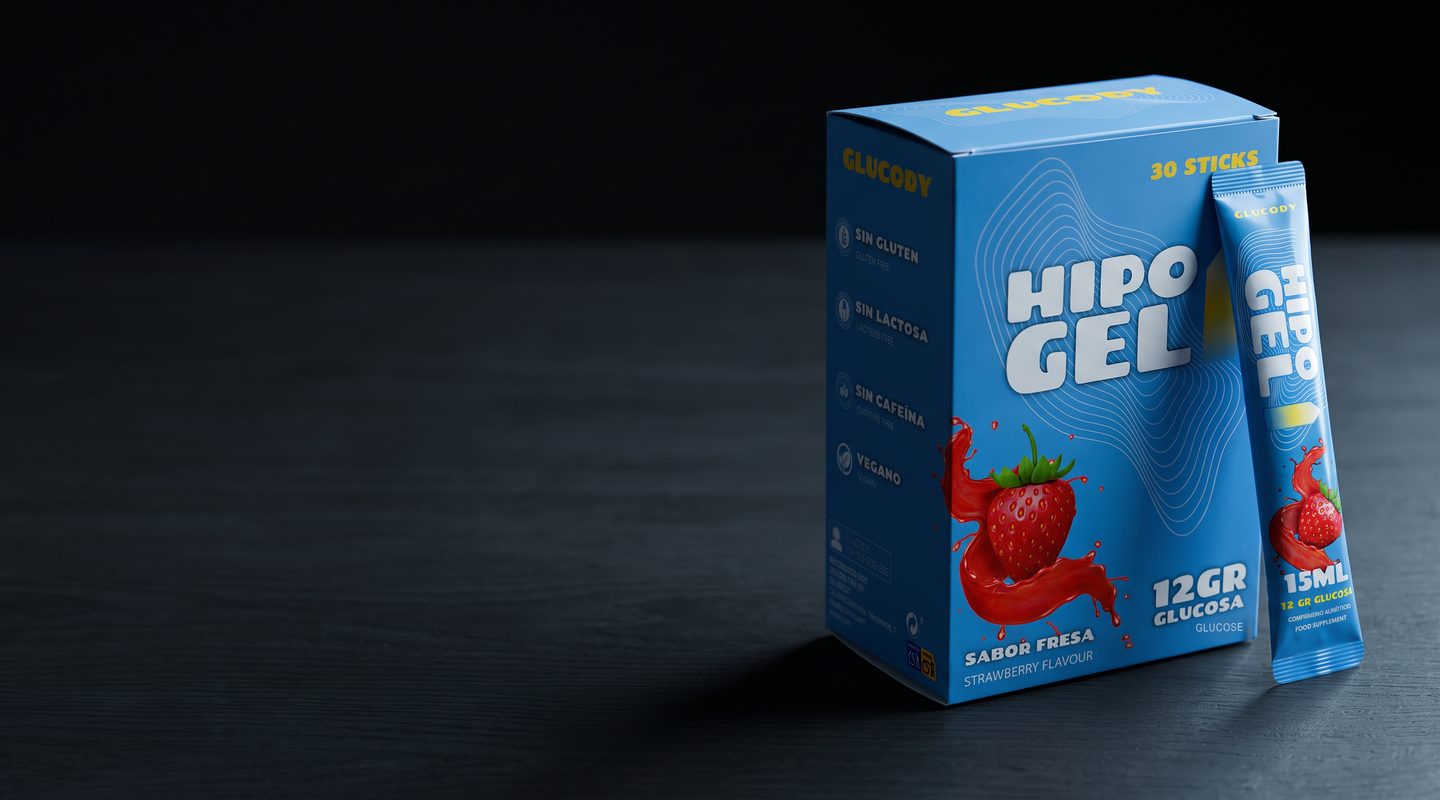
A single sachet of immediate-action glucose gels from Glucody provides 12 grams of pure glucose, enough to reverse a significant low in a few minutes.
The key is products with pure glucose
There is one factor that matters more than the format: whether the product contains pure glucose (dextrose) or a sugar mix. Sucrose, common table sugar, is made of glucose and fructose joined together. For the body to use it, it first has to separate them, which introduces a delay in absorption. Pure glucose, on the other hand, goes directly into the bloodstream without that intermediate step.
Both Glucody tablets and gels are formulated with pure glucose, which guarantees a predictable response regardless of the chosen format. Not all products on the market can say the same, so it’s worth checking the label before buying.

Using glucose tablets and gel: a strategy that makes sense
They are not mutually exclusive. Many people with diabetes or frequent episodes choose to carry both formats: tablets for fine-tuning day-to-day adjustments and gel as an emergency resource when the low is more severe or when the situation doesn’t allow calm dosing.
It's a sensible strategy. Tablets cover 90% of everyday episodes with precision and without risk of overcorrection. Gel is there for the remaining 10%: when urgency rules and there’s no time to count tablets. Having both on hand is not redundancy, it’s planning.
What to choose: glucose tablets or gel?
If your lows are usually mild or moderate and you value precise control over the amount of glucose you take, tablets are your format. If you have more severe episodes, practice intense sports, or want a quick-response option for moments when you can't dose calmly, gel is the most suitable choice. And if you want to be covered in any scenario, combining both is the most complete strategy.
At Glucody you will find immediate-action glucose gels formulated with pure glucose, in a portable format and ready for when you need them most.