When blood sugar drops too low, every minute counts. Whether you are experiencing mild hypoglycemia or helping someone in a more serious situation, knowing exactly what to do (and what to take) can make the difference between a passing scare and a medical emergency. Of course, in severe cases we recommend first alerting emergency services.
In this guide you will find, clearly and organized by speed of action, the best options to raise blood sugar quickly: from specific products designed for this to foods you have at home, including what to do in an emergency and how to act if a diabetic person needs help.
⚠️ Important notice: if you suspect severe hypoglycemia, call 112 or go to the emergency room
The information in this guide is for orientation and educational purposes. The guidelines described here, such as the 15/15 rule, are widely accepted general recommendations but do not replace professional medical evaluation and treatment. If you experience frequent hypoglycemia, if symptoms do not improve after applying the described measures, or if the affected person loses consciousness or has seizures, call 112 immediately and do not attempt to give anything by mouth. Your safety comes first.
First: confirm that your blood sugar is actually low
Before acting, ideally measure glucose with a glucose meter. Hypoglycemia is considered when the value is below 70 mg/dL. If you don’t have a glucose meter and suspect low blood sugar due to symptoms (tremors, cold sweat, dizziness, sudden hunger, confusion), act anyway: when in doubt, treating is always the safest option.
Once hypoglycemia is confirmed or suspected, the goal is to raise glucose above 70 mg/dL as quickly as possible. The key is to choose the right sugar source: the less fat and fiber it has, the faster it will act.
The 15/15 rule: the standard protocol to raise blood sugar
The guideline most recommended by endocrinologists and health organizations like the ADA (American Diabetes Association) or the CDC is the the 15/15 rule:
-
Take 15 grams of fast-absorbing carbohydrates.
-
Wait 15 minutes without exercising or moving excessively.
-
Measure your glucose again.
-
If it remains below 70 mg/dL, repeat the process.
Once glucose is above 70 mg/dL and if there is still more than an hour until your next meal, have a snack with slow-absorbing carbohydrates and protein (for example, whole wheat bread with cheese or a fruit with a handful of nuts) to stabilize levels and prevent them from dropping again.
Important: If after two rounds of the 15/15 rule your glucose does not rise, seek immediate medical attention.
The fastest options to raise blood sugar: ordered by speed
Not all glucose sources act equally fast. Fat and fiber slow sugar absorption, which is why chocolate or a whole piece of fruit are not the best options in an acute episode. Here are the alternatives ordered from fastest to slowest:
1. Specific glucose products: the safest and most reliable option
They are the first recommendation in most clinical guidelines because they offer a known and precise dose of pure glucose, without fats or proteins that slow absorption. Glucose reaches the bloodstream in 10-15 minutes.
-
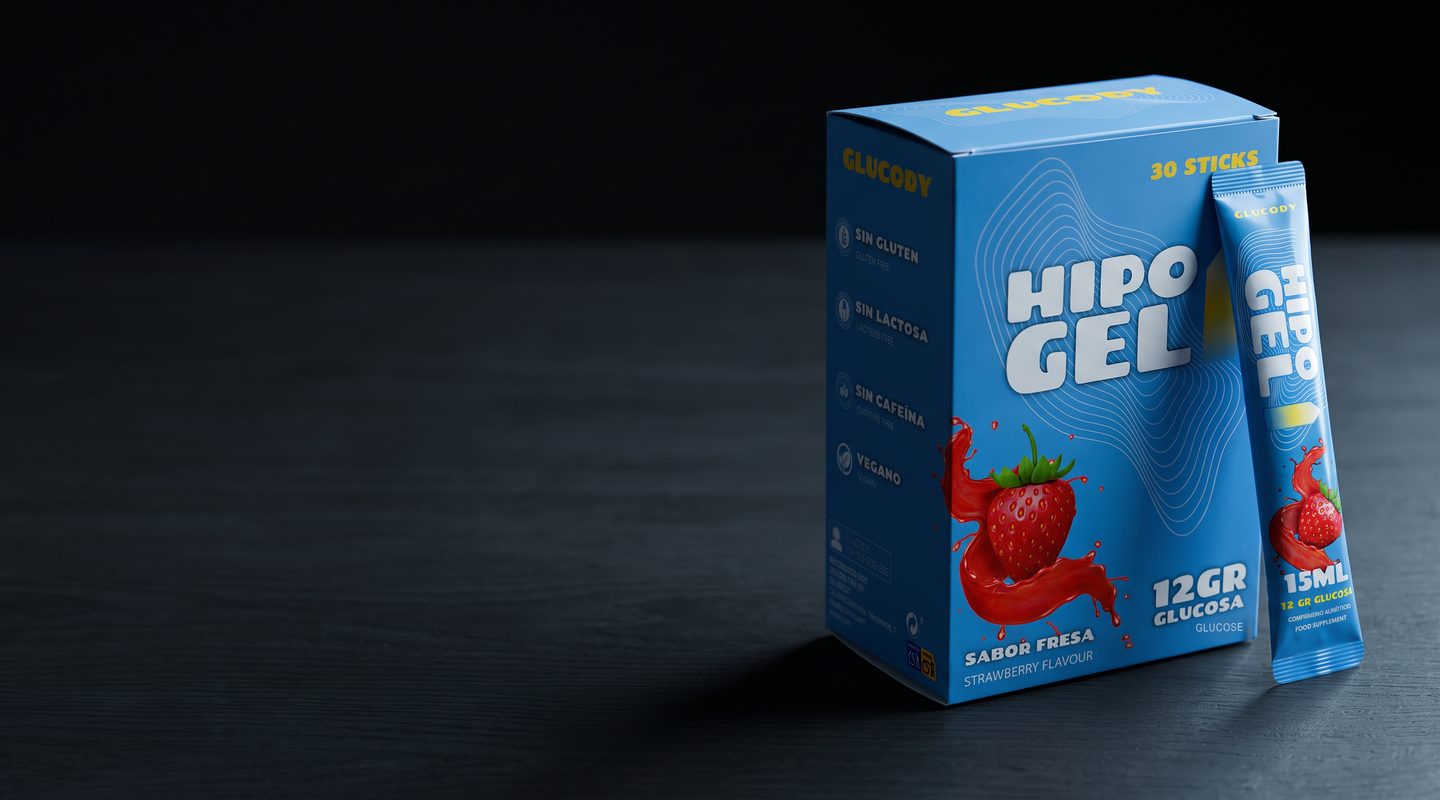
Glucose gels fast absorption: This is the fastest option of all. It is applied directly to the mouth’s mucosa and is absorbed even without swallowing, making it the best alternative when the person is drowsy, has difficulty chewing, or is in a more advanced stage of hypoglycemia. Each sachet contains an exact dose (usually 15 g of glucose). It is compact, requires no refrigeration, and can always be carried with you.
-
Glucose tablets to raise blood sugar: They are the most convenient option for everyday use. Each tablet contains a fixed amount of glucose (usually 4 g), allowing precise control of intake without needing to calculate or weigh. They are easy to chew, dissolve quickly, and don’t stain or spill. Ideal to carry in your pocket, purse, or backpack.
Both products have an additional advantage over conventional foods: since they contain no fats, the glycemic response is more predictable and uniform, making it easier to avoid rebound effects (excessive sugar rise after treating hypoglycemia).

2. Sugary drinks: quick and easy to find
Liquids are absorbed faster than solids because they don't require digestion. They are a good second option when you don't have glucose products on hand:
-
Natural or bottled fruit juice: About 150-200 ml provide approximately 15-20 g of sugar. Orange, apple, or grape juice are the most common. Without pulp, it acts faster.
-
Sugary soft drink (not light, not zero): Half a can of regular Coca-Cola or similar provides about 20 g of sugar. Always avoid sugar-free versions, as they won't help in hypoglycemia.
-
Water with sugar or honey: A tablespoon of sugar or honey dissolved in warm water acts quickly. Honey has the advantage that it can be placed under the tongue for faster absorption in emergencies.
3. Fast-acting solid foods: when there is no other option
Although they act more slowly than liquids or gels, they can be useful if you have nothing else on hand. Always choose options with the least fat possible:
-
Table sugar: two or three sugar cubes or a spoonful. Fast absorption. You can dissolve it in a little water to speed up the effect.
-
Hard candies or gummies without fatty filling: between 5 and 7 units usually provide about 15 g of carbohydrates. They are easy to carry, although their sugar content varies by brand.
-
Grapes or banana: have a relatively high glycemic index among fruits. A ripe banana can provide about 25-30 g of carbohydrates.
-
White bread or white toast: act slower than pure sugar but are useful if you have passed the acute phase and want to stabilize.
What not to take to raise blood sugar (common mistakes)
There are foods many people instinctively reach for during a low, but that are actually not suitable due to their slow absorption:
-
Chocolate: although they contain sugar, their high fat content significantly slows absorption. Not suitable for acute hypoglycemia.
-
Pastries and cookies: same problem as chocolate. Fat delays the glucose peak when you need it most.
-
Light, zero, or sugar-free drinks: do not provide glucose. They are not useful for treating hypoglycemia.
-
Nuts alone: rich in fats and proteins but low in fast-absorbing carbohydrates. Useful for stabilization afterward, not for the acute phase.
How to quickly raise blood sugar in a diabetic
People with diabetes have important particularities to consider when treating low blood sugar:
-
Always follow the 15/15 rule and don’t overdo the amount of sugar. Over-treating hypoglycemia can cause rebound hyperglycemia.
-
In type 1 diabetes, hypoglycemia is more frequent and unpredictable. Ideally, always carry glucose tablets or gel, especially during exercise, travel, or routine changes.
-
If the diabetic takes beta-blockers, the usual symptoms of hypoglycemia (trembling, palpitations) may be masked. In that case, frequent glucose monitoring is especially important.
-
If the person is conscious but weak or confused, glucose gel is the best option because it can be administered on the mucosa without needing to swallow.
-
After treating the low, note the time, glucose value, and what you took to help detect patterns with your medical team.
How to raise blood sugar quickly in an emergency
If the person is unconscious, unresponsive, or having seizures, the situation is a medical emergency. In this case:
- Call 112 immediately. Inform that the person may be suffering from severe hypoglycemia.
-
Do not try to give anything by mouth. They could choke. This is the most serious mistake made in a hypoglycemic emergency.
-
If you have a glucagon kit, administer it following the instructions. Glucagon is a hormone that stimulates the liver to release stored glucose and can save lives. It is available in injectable and nasal spray forms. High-risk type 1 diabetics should always have one available and their caregivers know how to use it.
-
Place the person on their side (recovery position) while waiting for help to prevent aspiration in case of vomiting.
-
If the person is conscious but very confused, glucose gel on the oral mucosa is the best alternative while help arrives.
How to raise glucose naturally: options to prevent drops
If you are not in acute hypoglycemia but just notice slightly low levels or want to prevent a drop before exercise or sleep, you can use foods that raise glucose more gradually and steadily:
-
Whole fruit: banana, grapes, apple, or orange provide natural sugars along with fiber, producing a smoother and sustained glucose rise.
-
Whole wheat bread with protein: a toast with fresh cheese or turkey provides medium-absorption carbohydrates combined with protein that stabilizes the glucose curve.
-
Natural yogurt with honey: combines lactose, protein, and simple sugar. Useful as a preventive snack before activities that may lower sugar.
-
Milk: lactose raises glucose moderately. A glass of milk provides about 12 g of carbohydrates with relatively slow absorption.
-
Cooked rice or pasta: complex carbohydrates that raise glucose gradually. Ideal for a meal before prolonged exercise.
Remember: these options are not suitable for treating active hypoglycemia. In that case, always prioritize fast-absorbing carbohydrates like glucose gels or tablets.

Comparison table: what to eat to raise sugar quickly
Here is a visual summary of the main options ordered by speed of action:
|
Option |
Approximate grams |
Speed |
Best for |
|---|---|---|---|
|
Glucose gel |
15 g |
⚡⚡⚡ Very fast |
Emergencies and daily use |
|
Glucose tablets |
4 g/tablet |
⚡⚡⚡ Very fast |
Precise dose control |
|
Fruit juice |
15-20 g / 150 ml |
⚡⚡ Fast |
At home or café |
|
Sugary soda |
~20 g / half can |
⚡⚡ Fast |
Easy to get |
|
Sugar or honey |
15 g / 1 tablespoon |
⚡⚡ Fast |
Homemade option |
|
Hard candies |
~15 g / 5-7 pcs |
⚡ Medium |
Carry in your pocket |
|
Whole fruit |
Variable |
⚡ Medium-slow |
Prevention, not emergency |
|
White bread |
Variable |
⚡ Medium-slow |
Post-drop stabilization |
Frequently asked questions
How long does it take for blood sugar to rise after taking glucose?
With glucose gel or tablets, improvement starts to be noticeable in 10-15 minutes. With sugary drinks, the time is similar. With solid foods, it can take 20 to 30 minutes. That’s why you shouldn’t repeat the dose before waiting at least 15 minutes: impatience can lead to a sugar overdose and rebound hyperglycemia.
Which foods naturally raise glucose quickly?
Foods that naturally raise glucose fastest are pulp-free fruit juice, grapes, ripe banana, and honey. However, for active hypoglycemia episodes, pure glucose products (gel or tablets) are always more reliable because their effect is more predictable and they contain no fats that slow absorption.
Can water with sugar raise blood sugar?
Yes. Dissolving one or two tablespoons of sugar in warm water is a valid option to raise blood sugar when you have nothing else on hand. Being dissolved, absorption is faster than chewing sugar alone.
Does orange juice raise blood sugar quickly?
Yes, natural orange juice without pulp is one of the most used drinks to treat hypoglycemia. About 150-200 ml provides approximately 15-20 g of fast-absorbing carbohydrates. If bottled with pulp, the fiber can slightly slow absorption.
How much sugar do I need to raise glucose to normal levels?
The standard guideline for adults is 15 grams of fast-absorbing carbohydrates. If glucose is below 54 mg/dL, some protocols recommend 20-24 g. In children, the amounts are smaller (between 8 and 10 g) and should be prescribed by a doctor.
Prepare before you need it
The best strategy to raise blood sugar quickly is to be prepared before the drop happens. Always carrying a fast-acting glucose source, like glucose tablets or gel, is the simplest and most effective habit you can adopt, especially if you have diabetes or know you are prone to lows.
Everyday foods can be an option at a specific moment, but they have limitations: fats slow absorption, quantities are hard to calculate, and you may not always have them on hand exactly when you need them.
If you suffer frequent hypoglycemia, talk to your endocrinologist to adjust your treatment and always make sure those closest to you know how to act in an emergency.