In the event of hypoglycemia, the first thing is to act quickly: take 15 grams of fast-absorbing glucose, wait 15 minutes, and check that levels have recovered. This is the standard protocol recommended by the CDC, the American Diabetes Association, and the main endocrinology services in Spain. In the following lines, you will find each step explained in detail, including what to do when you cannot act alone.
If you tend to experience lows or live with someone who does, having quality glucose gels always on hand can make a real difference in the moments that matter most.
Important notice before acting on hypoglycemia
This article describes the protocol for dealing with mild or moderate hypoglycemia in conscious individuals. If there is loss of consciousness, seizures, or the person does not respond, call 112 immediately. The information provided here does not replace emergency medical care or the instructions from your medical team.
If you are conscious and can act on your own
This is the most common scenario: you notice the first symptoms (trembling, sweating, dizziness, sudden hunger) and can react. The protocol to follow is the well-known 15 rule, endorsed by organizations such as the CDC and the Spanish Society of Emergency Medicine.
Step 1. Stop what you are doing and measure your blood glucose
Stop any physical or risky activity (driving, climbing stairs, cooking with fire) and check your capillary glucose if you have the meter handy. A reading below 70 mg/dL confirms hypoglycemia. If you don’t have a meter at that moment and symptoms are clear, treat it anyway: delaying to wait for confirmation can worsen the episode.
Step 2. Take 15 grams of fast-absorbing glucose
These are the best options, from most to least effective in terms of absorption speed:
- Pure glucose gel (one 15 g packet): the fastest and most precise option
- Glucose tablets (between 3 and 8 units depending on the weight of each tablet)
- Half a glass of natural fruit juice (about 150-175 ml)
- One and a half packets of sugar dissolved in water
- A tablespoon of honey (about 15 ml)
Avoid chocolate, cakes, or ice cream: their fat content slows carbohydrate absorption and delays glucose recovery, exactly the opposite of what you need at that moment.
Step 3. Wait 15 minutes and measure again
Rest. After 15 minutes, measure your glucose again. If it is still below 70 mg/dL, repeat the previous step. If after two or three repetitions it does not improve, call emergency services (112 or 061).
Step 4. Once the low is overcome, consolidate with a slow carbohydrate
When glucose rises above 70 mg/dL, eat something with slow-absorbing carbohydrates to prevent it from dropping again: a piece of bread, some María-type cookies, a yogurt, or a glass of milk. If your next meal is less than an hour away, you can have it earlier.

Why pure glucose works better than common sugar
Not all carbohydrates raise blood glucose at the same rate. Table sugar (sucrose) needs to be broken down in the intestine before absorption, which introduces a slight delay. Pure glucose, on the other hand, goes directly into the bloodstream without that intermediate step.
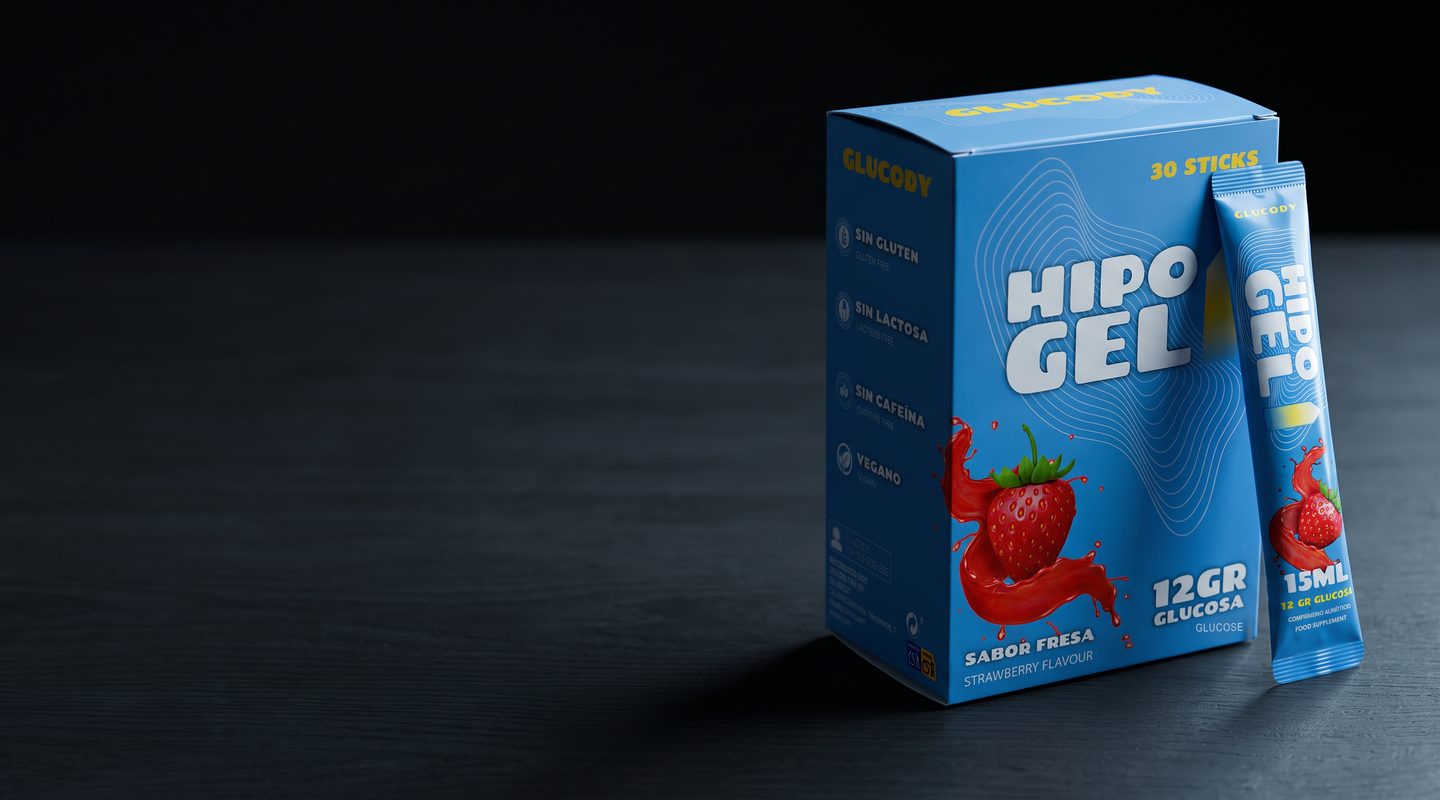
Commercial pure glucose preparations, such as gels or glucose tablets, are specifically formulated for this use: the amount is measured, the format makes them easy to take even with shaky hands, and absorption is more predictable. At Glucody, the quality glucose gels provide 12 grams per packet, in a format that fits in any pocket or bag and requires no preparation.
The most common mistake: overtreating hypoglycemia
When blood glucose drops, the body generates an urgent and anxious hunger sensation that pushes you to eat much more than necessary. The result is reactive hyperglycemia followed, in many cases, by a new insulin correction that can cause another low: the "sawtooth" cycle that endocrinologists have been trying to reduce for years.
The 15 rule exists precisely to avoid this. Taking exactly 15 grams, waiting, and measuring is more effective than eating uncontrollably even though it’s hard to resist the impulse at the moment. If you use tablets or gels with the marked dose, controlling the amount is much easier.
If there is another person with you or you are the one helping
If you witness hypoglycemia in another person who is still conscious and able to swallow, offer them one of the fast-absorbing foods mentioned earlier and make sure they remain seated or lying down. Do not leave them alone until they confirm they feel better and their glucose has risen.
Inform their family members or close companions where they keep their rescue glucose and how the 15 rule works. In many cases, the first to act is not the affected person but someone around them, and knowing the protocol beforehand can prevent mistakes under pressure.

The minimum kit you should have for hypoglycemia
The best response to a low starts before it happens: having the right materials always accessible. A basic kit includes a glucose meter with test strips, a source of fast-absorbing glucose, and, if prescribed by your doctor, a glucagon kit.
For rescue glucose, the most practical choice is a portable, dosed format that is easy to take in any situation. At Glucody, you can find quality glucose gels designed to carry with you at all times, with free shipping on orders over €29.99.