





If you live with type 1 diabetes (or care for someone who does), you undoubtedly know about the sensors and devices that facilitate glucose monitoring, such as diabetes patches. But do you really know what diabetes patches are and how they exactly work?
Diabetic patches have revolutionized disease management, offering comfort, accuracy, and greater freedom for those living with this condition. But beyond the device itself, there are also patches to cover the diabetes sensor, which help protect it and keep it in place. How are they used? What benefits do they have? How long do they last? Here we tell you.
What are diabetic patches?
Diabetic patches or diabetes patches are adhesive devices (usually transdermal) designed to help in diabetes management. They are used to monitor blood glucose levels, administer medications such as insulin, or protect control devices.
-
Continuous Glucose Monitoring Sensors (CGM), such as FreeStyle Libre or Dexcom. These patches are used to measure glucose, placed on the skin (usually on the arm), and measure glucose levels in real time.
-
Insulin patches (in development or available in some regions), that deliver insulin through the skin (transdermally) without the need for injections. For example: The V-Go (Disposable device that releases basal insulin and boluses).
-
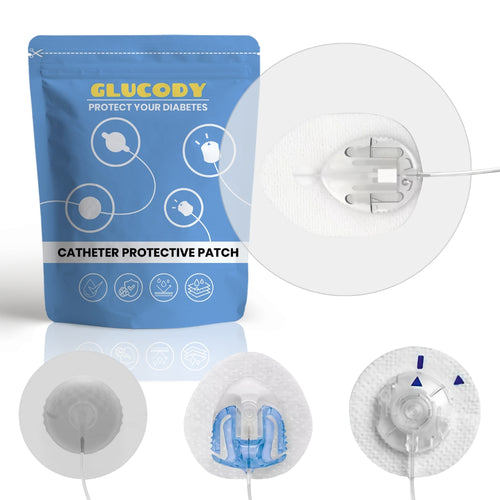
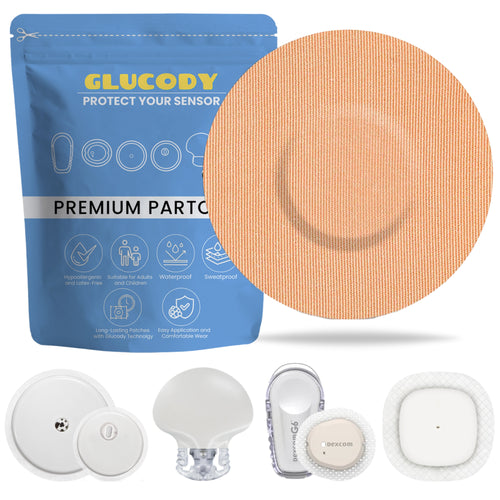
Protective patches, which are placed over the sensor to keep it adhered and secure for days or even weeks. At Glucody, you can find a wide range of protective patches, to cover the diabetes sensor, specially designed to protect without discomfort.
At Glucody you can buy your FreeStyle Libre 2 sensor protector to keep the glucose sensor protected.

How do diabetes patches work?
Their operation depends on the type of patch, but generally they use innovative technologies to avoid pricks or injections.
Glucose monitoring patches
These patches work as adhesive sensors placed on the skin, usually on the arm or abdomen. They contain a small filament that penetrates superficially to measure glucose levels in the interstitial fluid (the fluid between cells). The data is wirelessly transmitted to a mobile device or monitor, allowing continuous monitoring without constant finger pricks.
Technologies like FreeStyle Libre (Abbott) and Dexcom G6/G7 are advanced examples that offer real-time alerts when glucose rises or falls too much, improving diabetes control.
Insulin injection patches
These insulin patches are placed on the arm and other areas like the abdomen. They are designed to deliver insulin through the skin without visible or painful needles. They use biodegradable microneedles or transdermal diffusion systems that release the hormone in a controlled manner. Some, like the V-Go, are disposable devices that provide basal insulin and additional doses on demand.
Others, still in development (like MIT prototypes), respond automatically to glucose levels, mimicking the pancreas function. Although promising, their availability is still limited and they require medical supervision.
Protective patches for sensors
These adhesive patches are placed over the glucose sensor (such as FreeStyle Libre or Dexcom) to better secure it to the skin and prevent it from peeling off due to sweat, water, or movement. They are usually hypoallergenic, water-resistant, and breathable.
Some include ingredients like povidone-iodine to prevent infections at the insertion site. They do not interfere with measurements but extend the sensor's lifespan. They are recommended for active people or those with sensitive skin.
Advantages of using diabetes patches
Whether you use glucose sensors or insulin pumps, adhesive patches play a very important role and offer great advantages in your daily routine.
-
Longer device duration: By staying fixed, the sensor can complete its useful cycle without detaching.
-
Comfort and freedom of movement: You can swim, run, shower, or sleep without worrying about it falling off.
-
They prevent irritations: Good patches are designed with hypoallergenic materials that care for your skin.
-
More security for children: In pediatric patients, it is common for the sensor to come off due to play or sudden movements. The patch keeps it firm.
-
Discreet or fun designs: There are patches for all tastes, from neutral colors to lively prints.

How long can a diabetes patch last?
It depends on the type of patch we are talking about:
-
A glucose sensor like the FreeStyle Libre usually lasts between 10 and 14 days, while the Dexcom G6 can be used for up to 10 consecutive days.
-
The duration of an insulin patch varies depending on the model: some last 24 hours (like the disposable V-Go), others like continuous infusion systems usually last between 1 and 3 days. While experimental prototypes could work up to 3-5 days.
-
A securing patch, like the ones we offer you at Glucody, it can last up to 7 days, depending on factors such as physical activity, sweat, or if you shower daily.
Tips to protect your diabetes patch
If you already use a sensor or are thinking about using one, here are some useful tips to make your patch last longer and properly protect your device:
-
Clean the area well before placing the sensor: Make sure there is no cream, sweat, or residue that hinders adhesion.
-
Avoid rubbing against very tight clothing: It can lift the patch little by little without you noticing.
-
Do not touch it constantly: Curiosity is natural, but handling it weakens the adhesive.
-
Use quality patches: At Glucody we manufacture products designed for active people, with strong adhesives and materials gentle on the skin.
-
Consult your doctor if you have allergies: If you notice itching or redness, it could be due to a reaction to the adhesive. Always look for hypoallergenic products.
-
And, of course, change the patch if it gets excessively wet or starts to peel off. A poorly fixed sensor can give inaccurate readings or even stop working prematurely.
Take care of your diabetes sensor with Glucody products
Now that you know more about diabetes patches and how they work, it’s clear that they are not just an accessory. They are a key tool to protect your medical devices and ensure they perform their function.
At Glucody we offer you a wide selection of patches to cover the diabetes sensor, adapted to different sensor models, lifestyles, and aesthetic preferences. All our products are designed with durable, breathable, and skin-safe materials.


