Type 2 diabetes has no cure. What does exist, and has been demonstrated in clinical trials, is remission: maintaining glycated hemoglobin below 6.5% for at least three months without taking any antidiabetic medication. In the DiRECT trial, published in The Lancet, almost half of the participants achieved this within one year.
The difference between the two words is not a technicality. A cured disease disappears and is forgotten. A disease in remission is dormant: blood glucose returns to normal levels, but the risk of it recurring remains higher than in the rest of the population, and medical follow-up is never discontinued. Any product that promises a "definitive cure" is lying, and health authorities have been warning about this for years.
To understand the definition of remission, you need to work with two figures: day-to-day blood glucose and glycated hemoglobin, which reflects the average over the past three months. If you are not clear about the reference blood glucose values, it is worth reviewing them, because the rest of the article uses them.
Cure and remission are not the same
The international consensus defines remission of type 2 diabetes as glycated hemoglobin below 6.5% (less than 48 mmol/mol) sustained for at least three months after medication has been discontinued. This is not an opinion or a commercial threshold: it is the criterion used in clinical trials to count cases.
Remission means that the pancreas and liver have regained some of their function, not that the problem has disappeared. That is why follow-up continues, with regular checks of blood glucose, blood pressure, cholesterol, kidney function, and the back of the eye. Cardiovascular risk does not return to zero just because blood glucose has normalized.

What are the real chances of achieving remission?
The DiRECT trial is the benchmark. It was conducted in primary care centers in the United Kingdom with 306 people aged 20 to 65, who had had type 2 diabetes for less than six years, were not receiving insulin treatment, and had an average body mass index of 35. The intervention consisted of replacing their entire diet with meal replacements providing 825 to 853 kcal per day for three to five months, then reintroducing regular foods and maintaining the weight loss with ongoing support.
Results: 68 of 149 participants (46%) were in remission at 12 months, compared with 6 of 149 (4%) in the control group. At 24 months, 53 of 149 (36%) were still in remission.
How many kilograms need to be lost
Here is the figure that almost nobody publishes and that answers the real question. In DiRECT, the probability of remission at 12 months varied directly with the amount of weight lost:
| Weight lost at 12 months | Participants in remission |
|---|---|
| Gained weight | 0% (0 of 76) |
| Between 0 and 5 kg | 7% (6 of 89) |
| Between 5 and 10 kg | 34% (19 of 56) |
| Between 10 and 15 kg | 57% (16 of 28) |
| 15 kg or more | 86% (31 of 36) |
Weight loss was the strongest predictor of remission, with an adjusted odds ratio of 1.24 for each kilogram lost. And you do not have to reach 15 kg for it to be worthwhile: among those who maintained more than 10 kg of weight loss at 12 and 24 months, three out of four were in remission.
A nuance about the figures. Losing 15 kg and keeping it off for a year is not a magazine tip: in the trial itself, only 24% of people in the intervention group achieved it, and that was with a structured program, clinical supervision, and continued support over two years. The 86% figure describes those who achieved it, not the probability of achieving it.
The window is not open forever
DiRECT selected people who had been diagnosed less than six years earlier, and that condition was not arbitrary. When researchers measured liver and pancreatic fat and beta-cell function in a subgroup of 58 participants, they found that in those who achieved remission, the beta cells began functioning properly again, while in those who did not respond, there was no change in insulin production.
Roy Taylor, one of the lead researchers, draws a direct conclusion: the longer a person has had type 2 diabetes, the less likely it is that their beta-cell function will improve. That is why the best time to try is as close to diagnosis as possible.
This also answers one of the most searched questions on the subject: it is not about “regenerating the pancreas” with any remedy, but about removing the fat accumulated in the liver and pancreas so that beta cells that are still alive can resume their work. If they have already been lost, no amount of weight loss can bring them back.
Which approaches have evidence and which do not
Two approaches have scientific support, and both involve losing a significant amount of weight:
- Structured weight-loss programs, such as the one used in DiRECT, with a very-low-calorie diet for several months followed by maintenance. They require medical supervision and are not a plan to improvise at home.
- Metabolic or bariatric surgery, for people with obesity who meet the surgical criteria. It causes changes in the insulin system that go beyond the weight lost.
And this is what does not work, no matter how often you see it advertised: no herb, infusion, supplement, cinnamon, vinegar, seaweed, or “natural protocol” puts type 2 diabetes into remission or replaces insulin. There is no plant that can replace an antidiabetic medication. When a product is sold with the word “cure,” what lies behind it is marketing, and in the worst cases, someone who stops their treatment believing in it.
The other common half-truth is the miracle food. Diet matters a great deal, but it works as a whole and through its effect on weight, not because any particular ingredient has special powers. There are foods that help lower blood sugar levels and they are worth learning about, but none of them alone reverses diabetes.

The risk that almost no one warns you about
If you drastically reduce your calorie intake while taking glucose-lowering medication, especially insulin or sulfonylureas, the risk of hypoglycemia is real and can appear within the first few days. That is exactly why DiRECT excluded people treated with insulin and adjusted participants’ medication under clinical supervision from day one.
The practical rule is that you should not change your medication without your doctor. Do not reduce it, space out doses, or stop taking it just because your numbers have improved. Your healthcare team decides what to do and at what pace, and this adjustment is part of the process, not a formality.
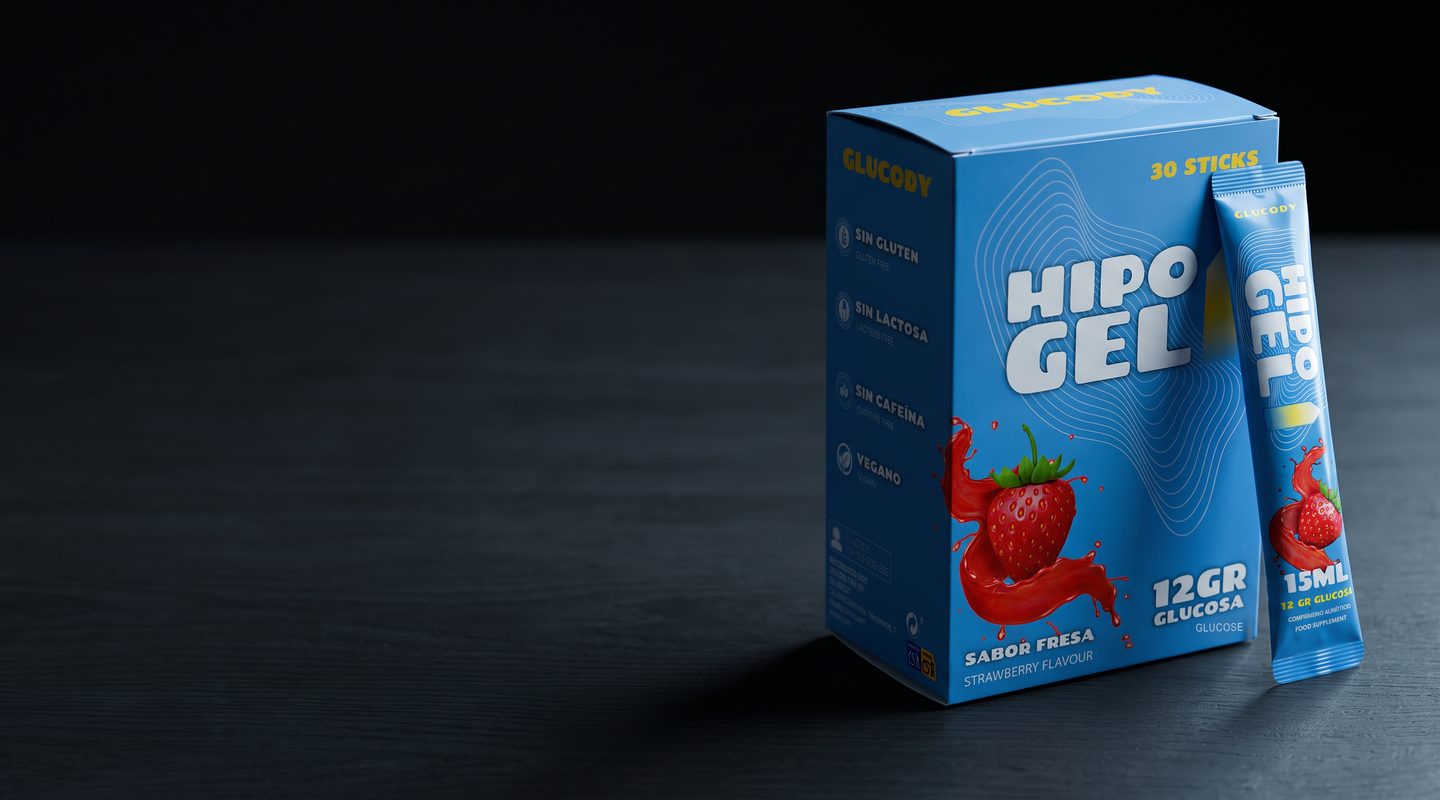
While this adjustment lasts, it is advisable to carry a source of pure glucose. The standard protocol for a drop below 70 mg/dL is 15 grams of fast-acting glucose, wait 15 minutes, and test again. A fast-absorbing glucose gel provides that dose in one sachet, can be taken without chewing, and works even when the drop leaves you with a dry mouth or no strength, which is precisely when dealing with solid food is most difficult.
Has anyone truly been cured of type 2 diabetes?
Many people have gone years without medication while keeping their blood glucose normal. Strictly speaking, none have been cured, and DiRECT’s long-term follow-up explains why.
In the five-year extension study, involving 85 participants who continued receiving dietary support, the average weight loss had settled at 6.1 kg and 11 people (13%) remained in remission. The benefits in glycated hemoglobin, blood pressure, and lipid levels were maintained in the group, but most had regained some of the weight and, with it, their diabetes.
Read without dramatization, that 13% says two things at once: lasting remission is possible, and maintaining it is harder than achieving it. The work does not end on the day you stop taking the last pill.
What about type 1 diabetes?
Type 1 diabetes does not go into remission with weight loss because the mechanism is different: an autoimmune process has destroyed the insulin-producing cells, and there is no fat to remove to restore them. It requires lifelong insulin. There is an initial phase, called the honeymoon period, in which insulin requirements temporarily decrease and it is sometimes mistaken for a lasting improvement, but it is not.
What to do if you have just been diagnosed
The time of diagnosis is the best window you are likely to have, so the conversation to have is with your family doctor or endocrinologist, and the specific question is whether you are a candidate for a structured weight-loss program aimed at remission. In Spain, several health services offer these programs through primary care.
In the meantime, there are four things you can do starting today: measure and record your glucose as often as instructed, take your medication exactly as prescribed, be physically active for at least 150 minutes a week, and treat weight as the main goal because it is the variable that makes the biggest difference. And, as a general rule, be wary of anyone who uses the word "cure."
This information is not a substitute for medical advice. The figures in this article describe clinical trial results in specific populations, not your particular case, and only a healthcare professional familiar with your medical history can tell you what is realistic for you.