Alexander Zverev, the 2026 Roland Garros champion, has lived with type 1 diabetes since he was three. On court, that means monitoring his glucose continuously, adjusting his insulin at every changeover and always keeping fast-acting glucose within reach to prevent or stop a hypo before it affects his game. Doing that across five sets, in 30-degree heat, against the best players in the world is no accident: it is a protocol.
Below you will see how that protocol works, what happened in Halle in 2026 when his sensor failed him, and which tools anyone with diabetes who stays active uses to stay in range during intense exercise.
A diagnosis at three that almost closed every door
Type 1 diabetes is an autoimmune condition in which the pancreas stops producing insulin. Unlike type 2, it has no link to lifestyle and there is no cure. Treatment lasts a lifetime: external insulin, constant glucose monitoring and permanent adjustment of food and exercise.
Zverev was diagnosed at the age of three. His parents, both former Soviet tennis players, were terrified. And there were doctors who told him that becoming an elite athlete with that condition was highly unlikely. He remembers it with anger: "That stuck in my head. I don't think you should put any limits on children."
For years he managed the condition in silence. Early in his career he would hide to give himself injections, convinced that showing that vulnerability would hand his opponents a psychological edge. It was not until August 2022 that he went public and launched the Alexander Zverev Foundation, which provides insulin to children in countries where access to treatment is a privilege.
What happens inside the body when someone with diabetes plays five sets
Intense physical exercise shifts blood glucose levels in ways that are not always predictable. During prolonged aerobic effort, the muscles burn through glucose very quickly, which can trigger hypoglycaemia (glucose that is too low). During short, intense anaerobic effort, the body releases adrenaline, which drives glucose up.
A professional tennis match combines both kinds of effort. There are short, explosive points, but also long rallies, breaks and a total duration that can pass the three-hour mark. For a tennis player with type 1 diabetes, that means blood sugar can rise or fall unpredictably over the course of a match. Every changeover is a window to check the sensor and adjust.
When blood sugar runs too low, motor responses slow down and tactical sharpness disappears. When it runs too high, muscle fatigue sets in faster and concentration drops. Zverev puts it precisely: "If I keep my sugar in the right range, it isn't a problem. That's the case in 90 per cent of matches. In the other ten per cent, it can make a difference."

Zverev's protocol: sensor, insulin and glucose at every changeover
Before the match: getting glucose ready
Control starts hours before he walks on court. A glucose level that is too low at the start of a match would force reactive corrections during play, and that always creates more imprecision. The aim is to begin with stable levels, in a range that allows full effort without an immediate risk of a sharp drop.
That means adjusting carbohydrate intake before the warm-up, reviewing the basal insulin plan for the preceding hours, and making sure the continuous monitoring sensor is properly placed and calibrated. A poorly placed sensor, or one that has been on for days, can give incorrect readings, and in tennis that has direct consequences.
During the match: the sensor as a silent umpire
You will often see Zverev glance at his wrist or forearm during changeovers. That is where the continuous glucose monitor (CGM) sits, a device that measures sugar levels in interstitial fluid and sends them in real time to a phone or a wrist receiver. No finger pricks, no interruption to play, and a reading every few minutes.
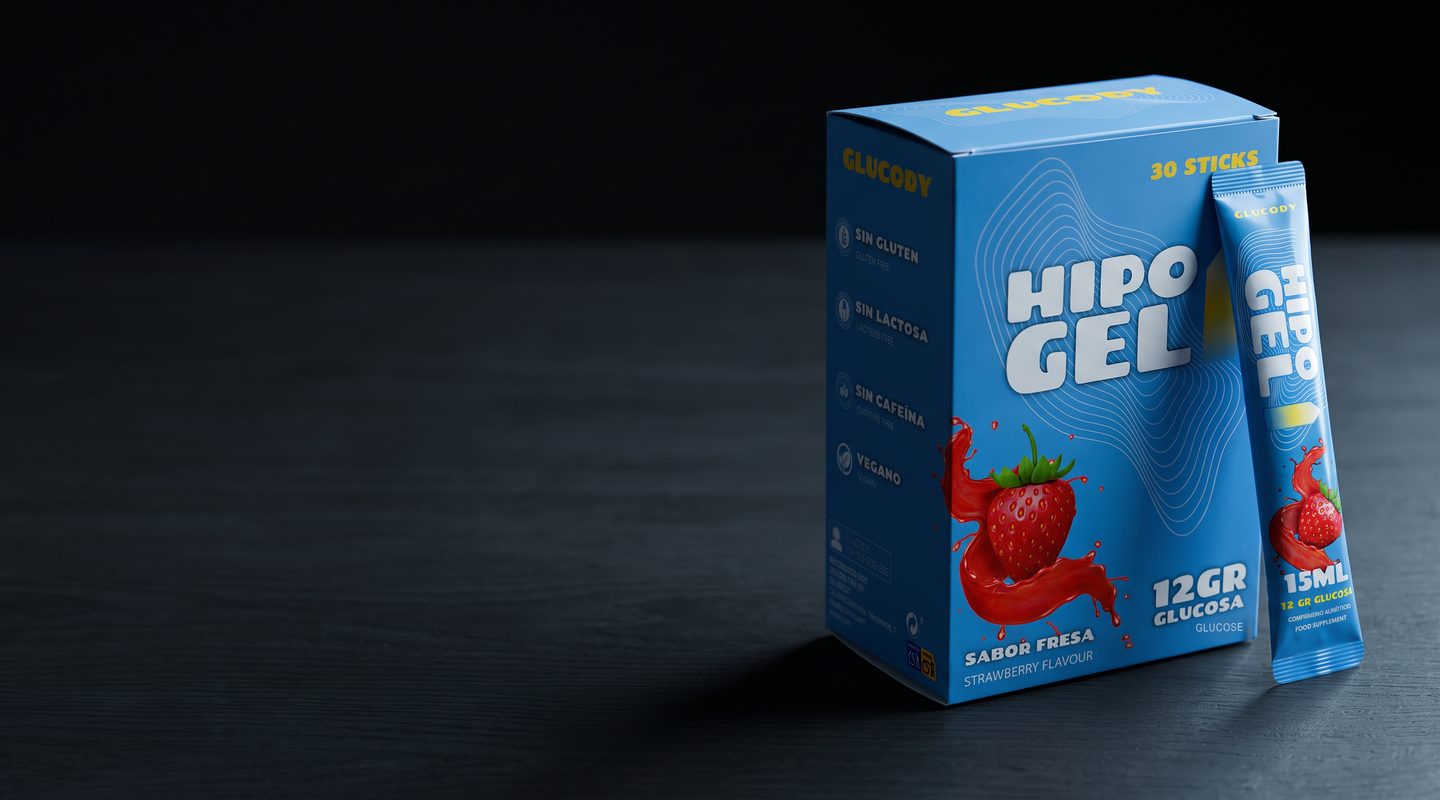
When the sensor shows a downward trend, Zverev acts immediately. His usual tool is glucose tablets: fast-absorbing, easy to carry in a shorts pocket and precise in dosage. They raise blood sugar in a controlled way without having to eat large amounts of food mid-match. When the drop is steeper, or the sensor predicts a rapid fall, Zverev also turns to glucose gels.
If the sensor shows an upward trend, the correction is insulin: a small dose he administers himself, by injection, during the break between games. This is what spectators see in long matches: Zverev takes out an insulin pen, gives himself the dose, and goes back to playing as if nothing had happened. It is not an odd ritual, it is the protocol.
When the sensor fails: the Halle 2026 episode
In June 2026, days before Wimbledon, Zverev went through one of the worst diabetes episodes of his sporting career in Halle. His glucose sensor showed very high readings when his levels were in fact low. Following the device, he gave himself more insulin than he needed. The result was severe hypoglycaemia in the middle of his match against Taylor Fritz.
He described what followed himself: "I was drinking one glucose drink after another, constantly. In the end I took in between 300 and 350 grams of sugar. It's as if someone drank an enormous amount of soft drink during a match: obviously you're not going to feel good. But I had to do it, otherwise I'd have been hypo the whole time." He lost the match. But he avoided a serious medical emergency.
The episode illustrates something many active people with diabetes know well: technology helps, but it is not infallible. That is why the protocol always includes a second check when symptoms do not match the sensor reading, and why there is always fast-acting glucose on hand so you can act without depending on the device.

Glucose gels and tablets: why they are the emergency option of choice
During intense exercise, the stomach is not in ideal shape to absorb complex solid food. Blood is redirected towards the muscles, digestion slows and tolerance for large volumes of food drops. That is why fast-absorbing glucose products are the standard both in elite sport and in everyday diabetes management.
Glucose tablets deliver a fixed, known amount of simple carbohydrate (usually 4 grams per tablet), which makes it possible to work out how many are needed to raise blood sugar by a given number of points. No variation in absorption, no need for water, and none of the digestion time that a piece of fruit or a sandwich demands. In a tennis match, where every minute on the bench counts, that matters.
Glucose gels work in a similar way but in liquid form: useful when the mouth is dry from exertion, when you would rather not chew, or when the drop is sharper and you need immediate absorption. Zverev used them in quantity during the Halle match once the hypo had taken hold.
Other elite athletes with type 1 diabetes
Zverev is not the only case. The list of high-performance athletes with type 1 diabetes is longer than it seems. Zverev himself pointed this out after winning Roland Garros: "There are plenty of Olympic gold medallists with diabetes, great footballers in Europe too."
Among the best known are Jay Cutler, the former NFL quarterback; Sir Steve Redgrave, the British Olympic rower with five golds; and Charlie Kimball, the IndyCar driver who races with a glucose sensor built into his helmet. In football, figures such as Nacho Fernández have brought visibility to living with the condition in professional sport. They all share the same basic protocol: continuous monitoring, insulin and rescue glucose within reach.
What Zverev's example says to anyone with diabetes
Winning Roland Garros with type 1 diabetes does not make intense exercise risk-free. What it shows is that the risk can be managed. With the right protocol, the right devices and rescue products on hand, the safety margin grows significantly.
For anyone with diabetes who plays sport, whether recreationally or competitively, the principles are the same ones Zverev applies: check before you start, monitor during the effort, and always have fast-acting glucose available so you can act before a hypo takes hold. At Glucody you will find glucose gel and tablets formulated for exactly that use: precise doses, fast absorption and a format designed to carry with you during physical activity.